
Is a LIMS the right solution for your lab?
In our eBook, "Has Life Science R&D Moved Beyond Traditional LIMS", we discuss the capabilities that Benchling shares with many LIMS and highlight where Benchling can deliver more value to your lab than a typical LIMS.
Download the "Has life science R&D moved beyond traditional LIMS" eBook
Is a LIMS the right solution for your lab?
Lab information systems (LIMS) are widely used throughout the life science industry, with many lab IT managers automatically turning to these types of platforms for their company’s information needs. But LIMS can be complicated to configure and use, making them time-consuming and frustrating for end-users. In addition, the complexity of most LIMS make them expensive to integrate with other software systems, such as an electronic lab notebook (ELN).
By stepping back and evaluating all the information challenges across your organization, you may find that your organization needs something more than what a conventional LIMS can offer. Instead, you may be better served by a single, unified, cloud-based platform that delivers the capabilities of an electronic lab notebook with fully integrated molecular biology tools, sample management, inventory management, instrument management, electronic signatures, and complete audit trails. In short, you should consider Benchling.
In this eBook, we discuss the capabilities that Benchling shares with many LIMS and highlight where Benchling can deliver more value to your lab than a typical LIMS.
A Unified Platform for a New Era in Life Sciences
Benchling is a cloud-based platform that supports your entire R&D process from early research to late-stage development by delivering a wide range of functionalities, flexible integration and configuration, and user-friendly, easy-to-navigate software that is compatible with your R&D workflows.
With Benchling, you get a seamless solution for sample tracking, inventory management, regulatory compliance, instrument integration, process management, and reporting and analytics. All of these applications share the same configurable data model, so they can be accessed through a single database—making teams more connected and productive.
Notebook: The most user-friendly electronic lab notebook in the industry— reduce time to data entry by 85% with the first cloud-based notebook built for modern life science.
Molecular Biology: A comprehensive molecular biology suite of 10+ tools in one collaborative environment—build, share, and record DNA and amino acid sequences in one unified platform.
Registry: A convenient and easy-to-use registration system built from the ground up for large molecule R&D—model biological entities and easily enter and extract the data you need.
Inventory: Laboratory inventory management—track the locations of vials, wells, batches, and more, and automatically link results to them.
Workflows: A digital process management platform for early research through development—organize any scientific workflow into trackable stages and test new variations to optimize your outputs.
Insights: Easy-to-configure dashboards and reports provide a full view of R&D—everyone from scientists and managers to executives can have customized dashboards to deliver the answers that they need.
Benchling Platform
Lab Automation: Synchronize informatics and instrumentation to drive efficiency and maximize the potential of your full suite of molecular laboratory tools.
Validated Cloud: Unify R&D teams for easier collaboration and data management to accelerate time-to-market while meeting compliance requirements with a modern cloud architecture and enterprise-grade security.
Codeless Configuration: Configure and reconfigure workflows without a single line of code so you can quickly adapt and align to your evolving R&D process, resulting in rapid prototyping, full deployment, and fast time to value.
Developer Platform: Integrate any instrument, software, and/or database with Benchling to centralize your data and enable automation. Equipped with APIs, Events, and Data Warehouse, so you can connect Benchling to existing IT infrastructure with ease.
Benchling provides LIMS sample management optimized for modern molecular biology R&D
Easily Access, Annotate, and Track Samples
While sample tracking is arguably the most basic capability of every LIMS, it can actually be one of the most complicated to configure for life science R&D labs. The reason is that “sample” can mean different things to different labs, including proteins, cell lines, plasmids, miRNA, oligonucleotides, and more. Each of these entities has distinct relationships to each other as well as specific types of associated information. As a result, configuring LIMS sample management capabilities typically requires extensive customization to correctly connect entities and link relevant information in a way that increases efficiency for your lab’s unique workflows, with additional customization if your workflows change.
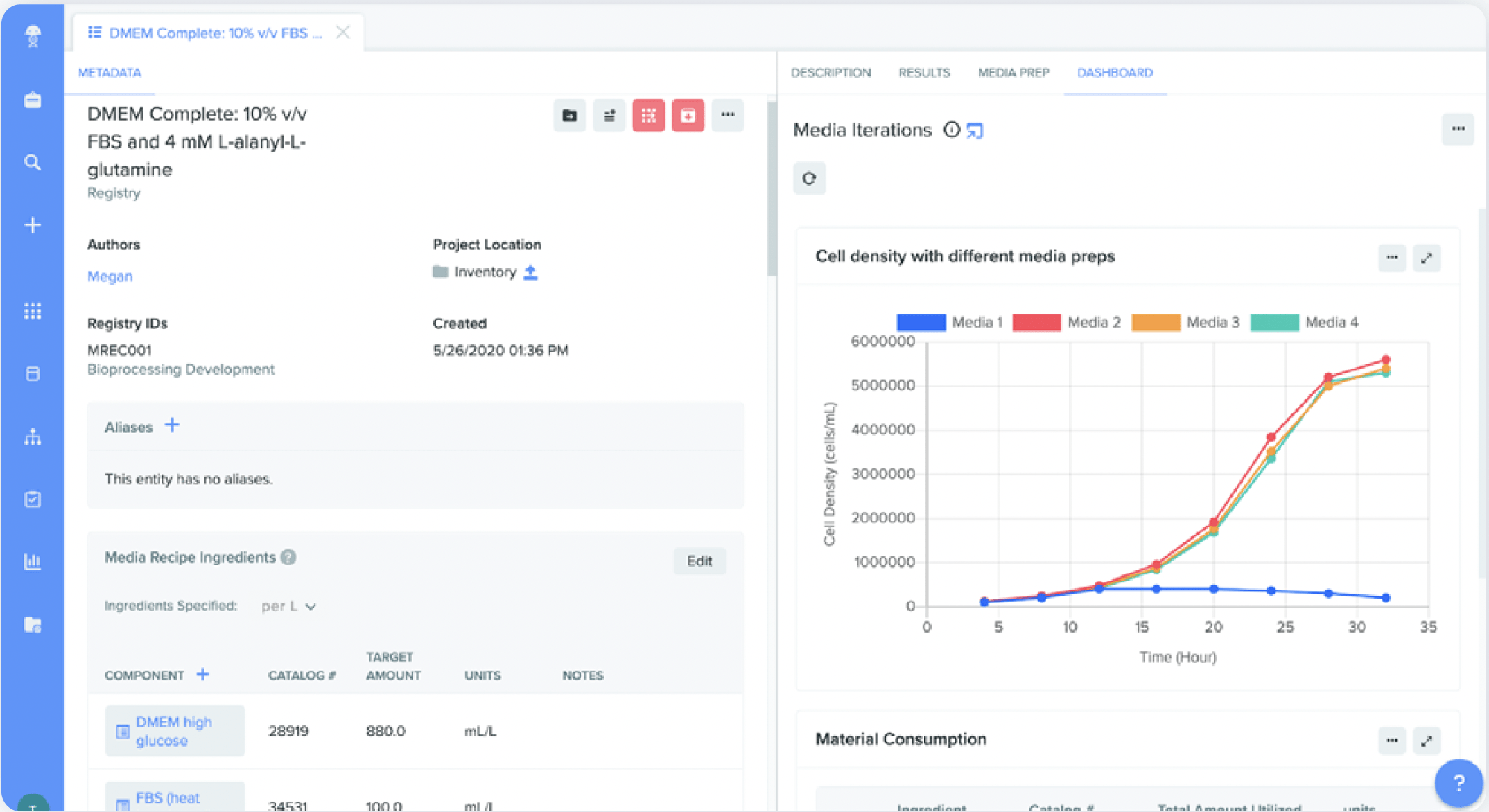
With Benchling, however, you get the same sample management capabilities that a LIMS delivers, but in an easily configurable, cloud-based platform. You can create a digital representation of any entity without having to type a single line of code, automatically interconnect DNA and protein constructs, structure parent/child relationships for any entities to power lineage tracking, and more.
Model large molecules and other data without a single line of code—codeless configuration and custom data types mean you can build a registry catered to your particular scientific needs, from CAR-T development to fermentation
Connect physical samples to their experimental context—with unified Applications and interlinked data, you can see everything that’s ever happened to any registered entity and even automatically surface data from one entity to its interlinked entities, so you never have to enter the same data twice
Save time with bio-intelligent links—Benchling automatically identifies and interlinks related DNA construct components and allows you to impose sequence constraints to avoid building the same construct multiple times
Reduce manual entry with automation—autocompute metadata such as molecular weight based on amino acid or DNA sequence, or from linked entities
Reduce manual entry with bulk registration—automatically register entities produced through bulk cloning, bulk annotation, and bulk translation functions
Even better, Benchling goes beyond typical LIMS sample management capabilities with unified Applications that provide a seamless user experience and single interface for:
Sample management
Electronic lab notebook
Molecular biology tools (such as plasmid mapping and protein sequence annotation)
Inventory management
Request management
Workflow management
Instrument integration
Operational insight
Benchling not only helps your teams track samples and their related data, but gives you the ability to quickly make connections and gain critical insights to drive your science and business forward.
Benchling seamlessly integrates LIMS inventory management with an ELN
Build a digital window into your physical lab
LIMS inventory management capabilities can help your lab track reagent and instrument usage, providing a searchable digital record of your lab’s supplies and equipment. The advent of electronic lab notebook (ELN) technology has promised the ability to build a similar digital representation of your studies, and some R&D labs choose to have both of these separate systems.
However, by combining LIMS inventory management capabilities with an ELN in a single, unified interface, you can increase efficiency, simplify operations for your scientists, and understand the status of your lab from the convenience of a single dashboard.
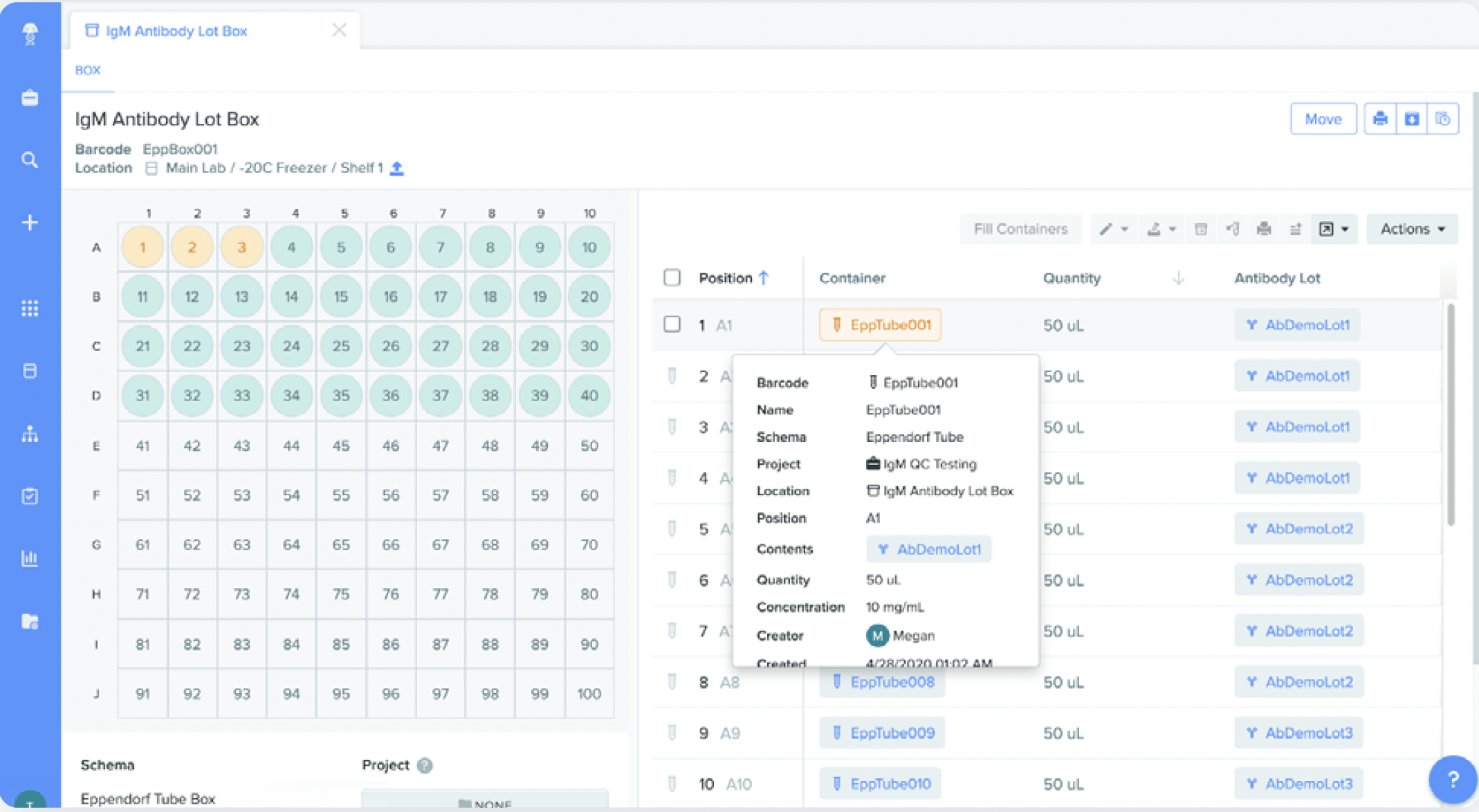
Benchling provides LIMS inventory management capabilities and more
With Benchling you can represent more of your lab in a digital format than with a traditional LIMS, increasing efficiency, scientific insight, and operational insight.
Optimize space usage while keeping track of the locations, expiration dates, lot numbers, and amounts of reagents and consumables:
Organize the lab the way you need it with custom inventory structures and hierarchies
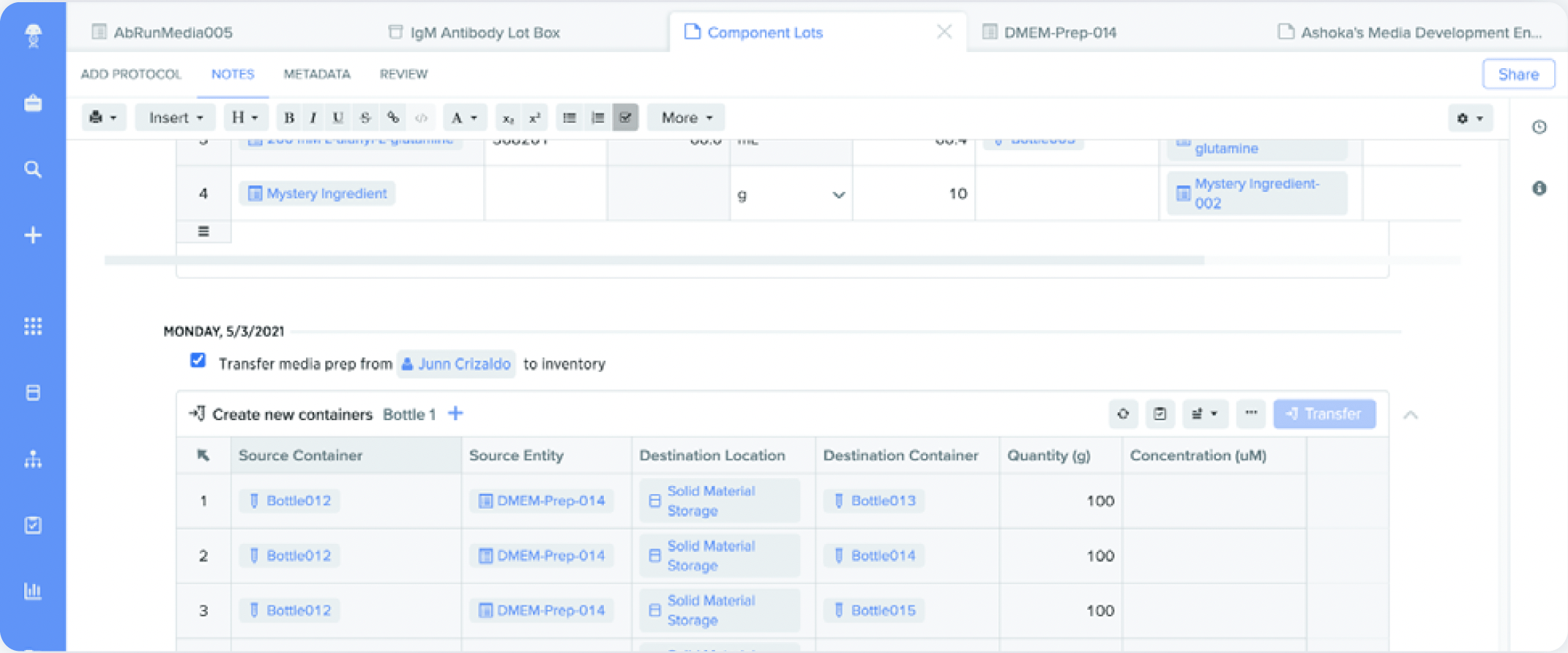
Gain insight into supply levels of critical reagents and consumables when you link them to Notebook entries where you can track consumption and materials use
See exactly where to find the reagents you need when you link entities in your inventory to protocols, workflows, samples, and Notebook entries
Save time entering and tracking inventory entries with label scanning and barcode printing
Reduce time spent entering the same information into multiple systems with a single, unified interface for ELN and LIMS inventory management capabilities
Track instrument usage with Benchling Workflows to help manage maintenance and calibration schedules
Benchling’s straightforward point-and-click interface gives designated users the ability to easily configure and reconfigure inventory structures as needed—no vendor interaction required and no coding necessary. Learn more about Benchling’s codeless configuration capabilities.
By thinking about the information needs of typical life science R&D labs and combining solutions into a single, unified, cloud-based interface, Benchling delivers unparalleled efficiencies and insights beyond what a typical LIMS can offer.
Benchling provides LIMS workflow management capabilities with codeless configuration
Standardize and track R&D workflows from discovery through bioprocessin
Life science R&D is complex, quickly evolving, and multidisciplinary, requiring diverse instruments and sophisticated processes. To maintain productivity, quickly identify bottlenecks, and forecast success and failure, workflow standardization and transparency is imperative—and achievable with Benchling as a LIMS workflow management system.
Conventional LIMS attempt to standardize life science R&D workflows but often lack simplified dashboards and are incompatible with newly introduced instruments and software. This creates delays when transitioning through the commercialization lifecycle and threatens the health of the company’s software infrastructure.
Life science companies need a system that can standardize their workflows and adapt to the changing needs of the company. Benchling is optimized for life science workflows for everything from early research through development.
When deployed as a LIMS workflow management system, Benchling unifies departments, brings full transparency to experimental processes, and eliminates data silos between projects, teams, and instruments, making teams more productive, efficient, and accountable so their next project milestone can be achieved on time.
Rather than devote a substantial amount of budget trying to configure and integrate outdated software, you can focus on more innovative, forward-looking IT projects.
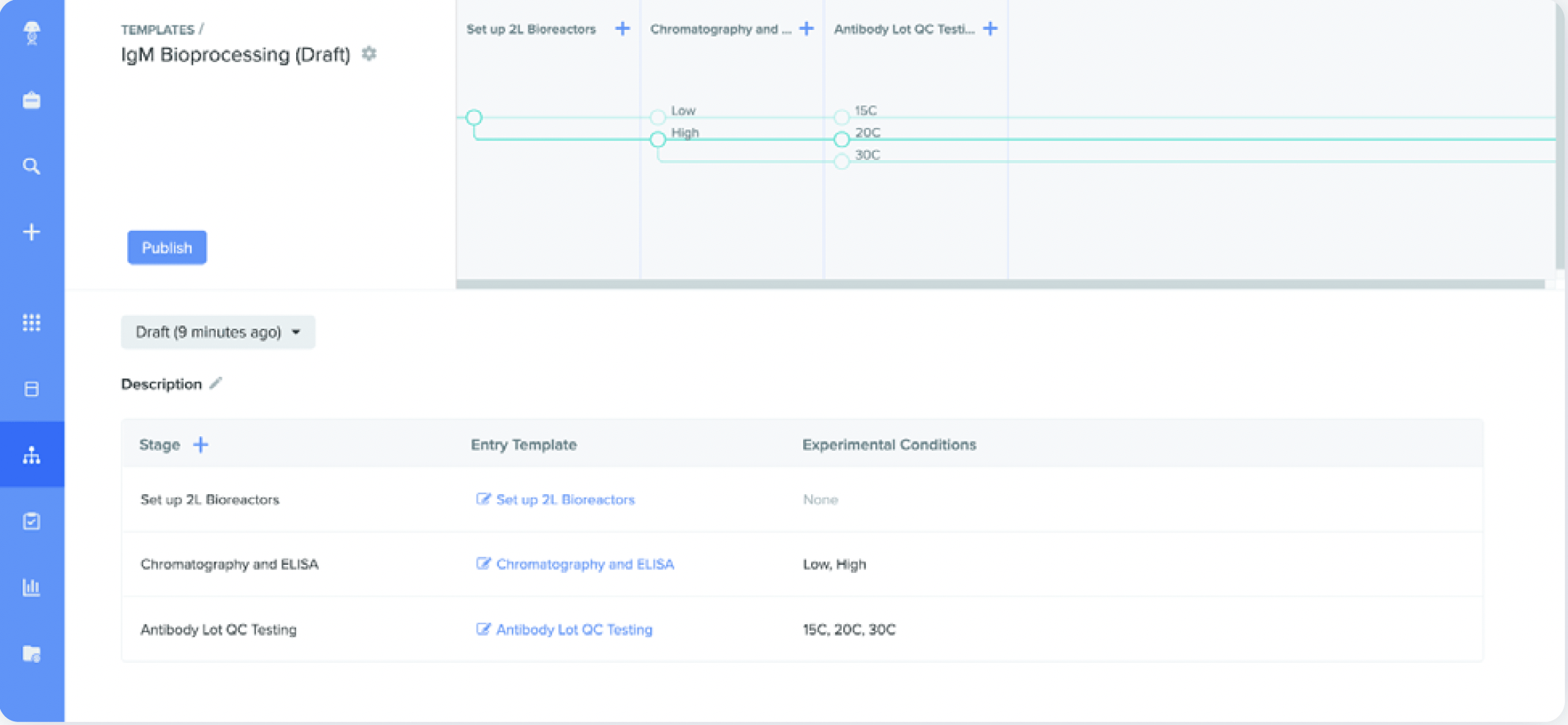
Meet your study and productivity goals
Companies using Benchling can organize their scientific workflow into trackable stages and can test new variations to optimize and sustain outputs—so teams can meet their goals day-to-day and long term.
Organize and standardize processes
Create Workflows templates that link to specific samples and protocols to standardize execution across your R&D organization
Flexibly adjust processes to support evolving research needs and automatically track workflow versions
Capture results on a stage-by-stage basis
Coordinate process fulfillment across teams and collaborators
Create templated notebook entries to standardize process creation and entry
Rapidly optimize workflows
Identify bottlenecks in your processes and test new process variations on the fly without the need for any coding
Capture and manage data in unstructured and structured formats
Coordinate multi-team project transitions by eliminating manual handoffs
Track and visualize experiments and workflows
Track the progress of any R&D process in real-time and promptly fix things that get broken
Structure experiments with branches based on different inputs and conditions
Visualize experiment branching and sample lineage
Build custom dashboards to analyze processes across studies or programs
Predict successes and failures
Compare the outputs, speed, and efficiency of your processes to identify predictors of success and failure
Mine trends easily, trace historical context, and assess effects of conditions to optimize research processes
Enable executives to leverage the entirety of their organization’s data to inform business decisions
Benchling seamlessly integrates into life science R&D workflows and is built to be configured through an intuitive UI by designated client-side administrators, so they can rapidly adapt the system to their organization’s evolving workflows without depending on vendors.
Benchling offers LIMS reporting capabilities that streamline compliance and deliver operational insights
Preparing for an audit by a regulatory body can take a lot of time and effort, especially if you need to pull records from multiple software systems. LIMS reporting tools should make this process easier, but for many organizations, the reality is not so straightforward. Issues can arise as a company grows. LIMS configured when a company is smaller and has simpler needs are difficult to adapt to new, more complex workflows—creating gaps in record tracing and headaches during audits.
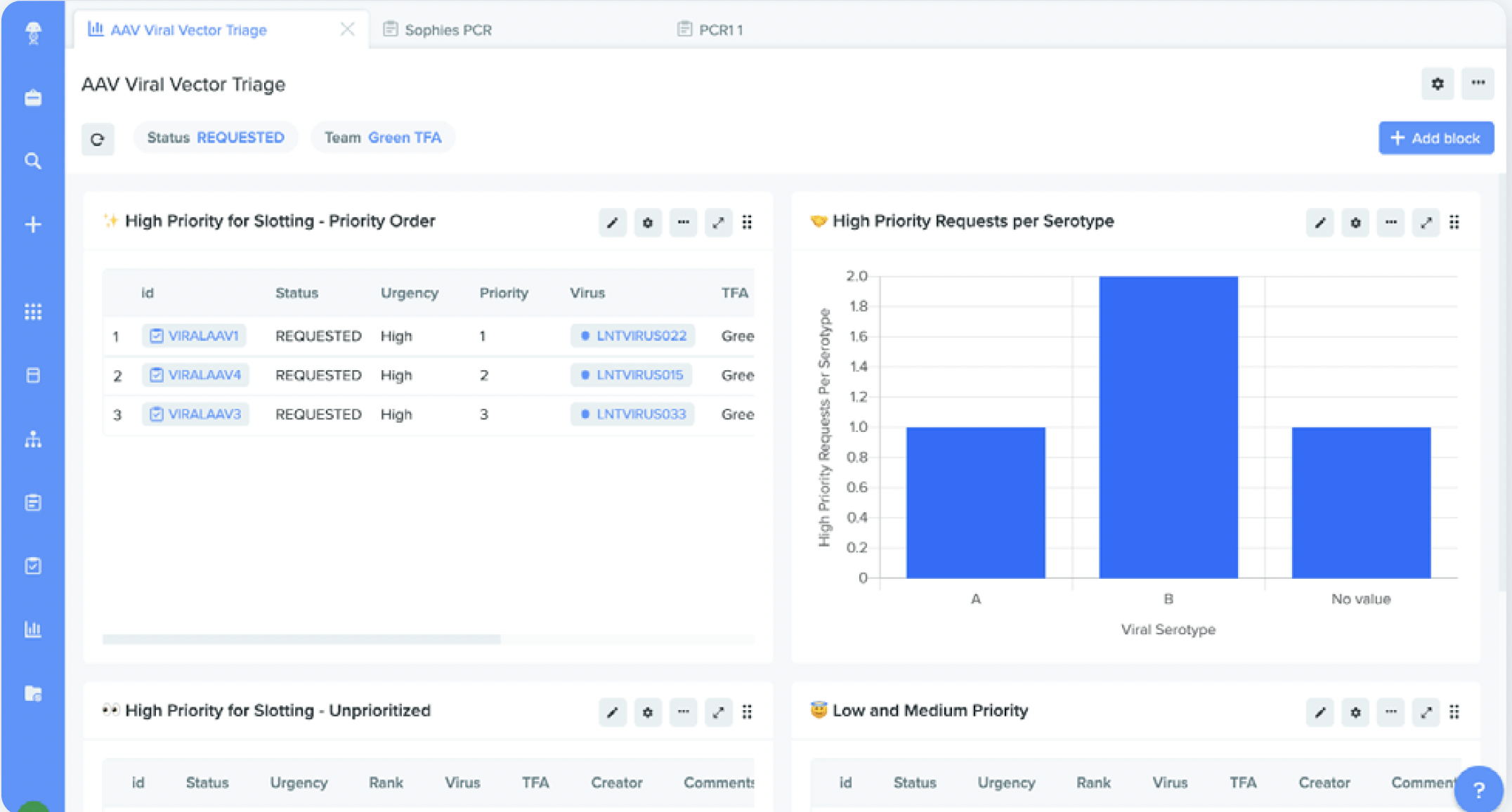
Here’s where Benchling can help.
A unified, cloud-based informatics solution for R&D labs, Benchling provides LIMS reporting functionality that can help you efficiently prepare for regulatory audits and deliver insights.
With Benchling Registry and Inventory, you can track samples, reagents, and consumables on their journey through your lab, record assays using the Notebook application, and even automate data collection by integrating laboratory hardware. Because you can configure Benchling to link all types of information to each sample—including the assay, the instruments used, the operator, and all the electronic signatures and approvals—you can quickly find the information an auditor requests.
Even better, keeping Benchling up-to-date with your lab’s changing needs is easy for your organization’s designated administrator to accomplish. Adjusting Benchling’s configuration relies on an easy click-based user interface and does not require any vendor intervention or coding.
With Benchling, you can:
Meet regulatory requirements with application controls such as locking electronic signatures, restricting user access, and strict versioning of all edits for audit trails
Quickly and efficiently respond to auditor requests with comprehensive, standardized digital records (including 21 CFR Part 11 compliance)
Generate customized dashboards and reports for insight into operational efficiency and productivity
Easily reconfigure and update Benchling to meet the changing needs of evolving organizations
Meet your lab’s information needs from a single, unified, cloud-based interface
The benefits of Benchling go beyond providing LIMS reporting functionality, however. With Benchling, your organization can also access comprehensive ELN capabilities and molecular biology tools for a truly seamless digital experience. The results for your business are great, with increased efficiency and productivity. But the results for your co-workers are even better, with a digital tool that is easy to use and gets out of their way, rather than in their way.
Benchling provides LIMS automation and instrument integration capabilities
One of the advantages of a LIMS system is the ability to manage automated instruments and even automate data collection, which accelerates workflows, reduces the error of manual data entry, and frees up time for greater productivity. However, as we’ve mentioned in earlier chapters, the promise of efficiency with LIMS automation capabilities can be compromised by non-intuitive user interfaces and the complexity of configuring the system. And even when a lab is completely happy with their LIMS automation and instrument management setup, they may find it difficult to reap the full benefits of moving to an all electronic information system due to challenges integrating LIMS with an ELN.
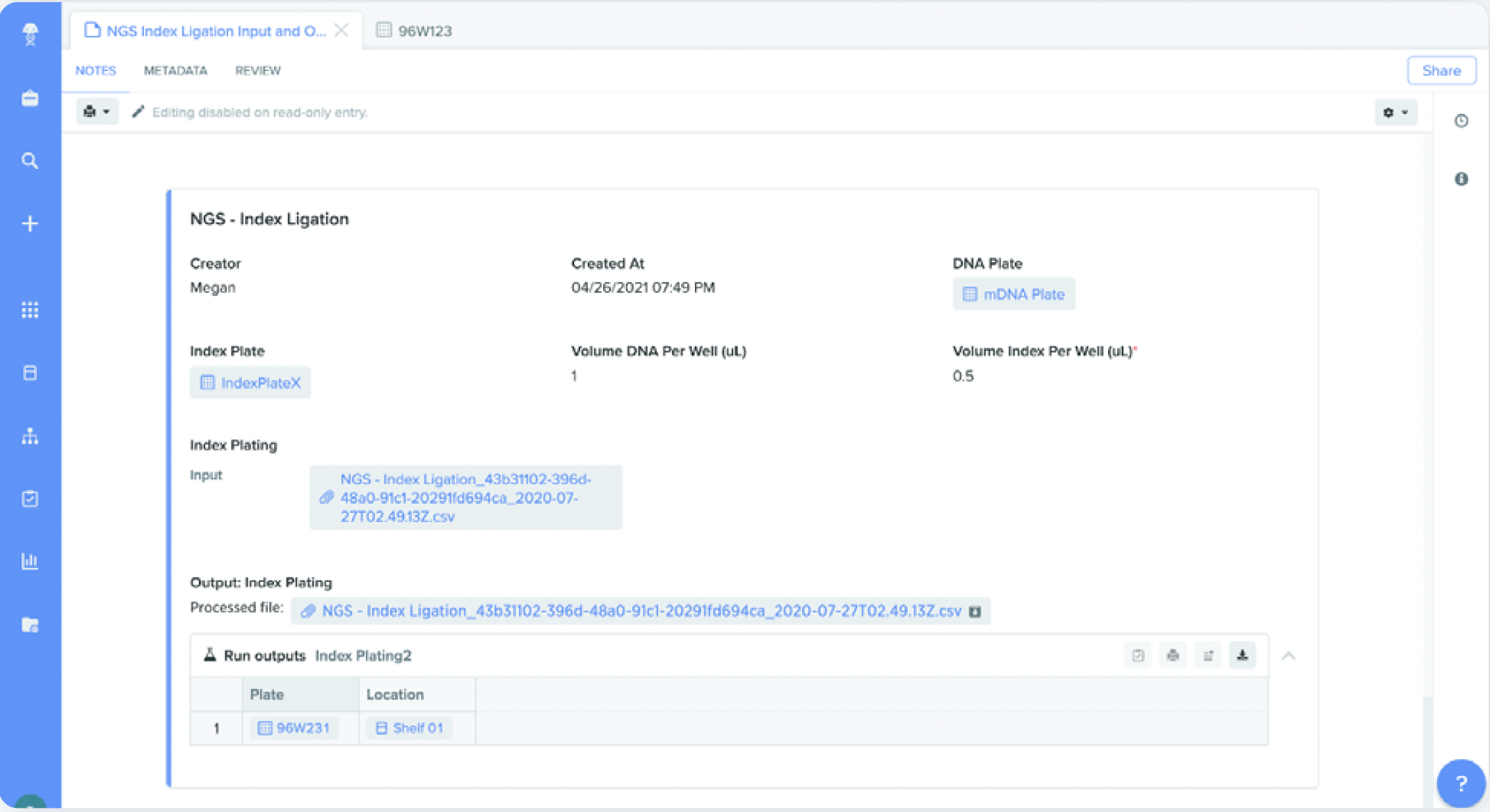
With Benchling you can have that single, cloud-based information system that integrates all of your automated workflows and data collection with sample management, inventory management, and ELN capabilities. Connect every instrument, every team, and every dataset to increase efficiency and data integrity.
With Benchling, you can:
Enhance productivity—remove manual tasks from your workflow, such as transferring or transcribing large quantities of data, to increase scientist productivity and reach your milestones faster
Improve data integrity—automatically sync data from instrument runs across all Benchling applications, removing the need for manual transcription and minimizing the risk of human error
Orchestrate your robotics—easily create robot programming instructions based on your unique input parameters and select samples that are digitally stored in your Benchling Inventory
Simplify sample and inventory management—automatically create and update entities in Registry and Inventory, including remaining sample and reagent amounts
Benchling’s Developer Platform suits the flexibility and speed of modern life science R&D. Our system’s REST APIs, Events-triggered integrations, and built-in Data Warehouse work together to provide a centralized platform for seamlessly integrating Benchling into your digital ecosystem.
“Our customers increasingly demand end-to-end data traceability tracked through a sample management software that is integrated with automation. We are delighted to work with Benchling to deliver on this need.”
Conclusion
Benchling goes beyond the capabilities of a typical LIMS to suit the needs of modern life science companies. Benchling was built to function optimally for wide-ranging life sciences disciplines, including the emerging, complex modalities of large molecule R&D that create unprecedented amounts of data using diverse instruments and processes.
IT professionals can easily integrate, configure, and validate Benchling’s software to ensure productivity, efficiency, and compliance throughout the entire R&D lifecycle.
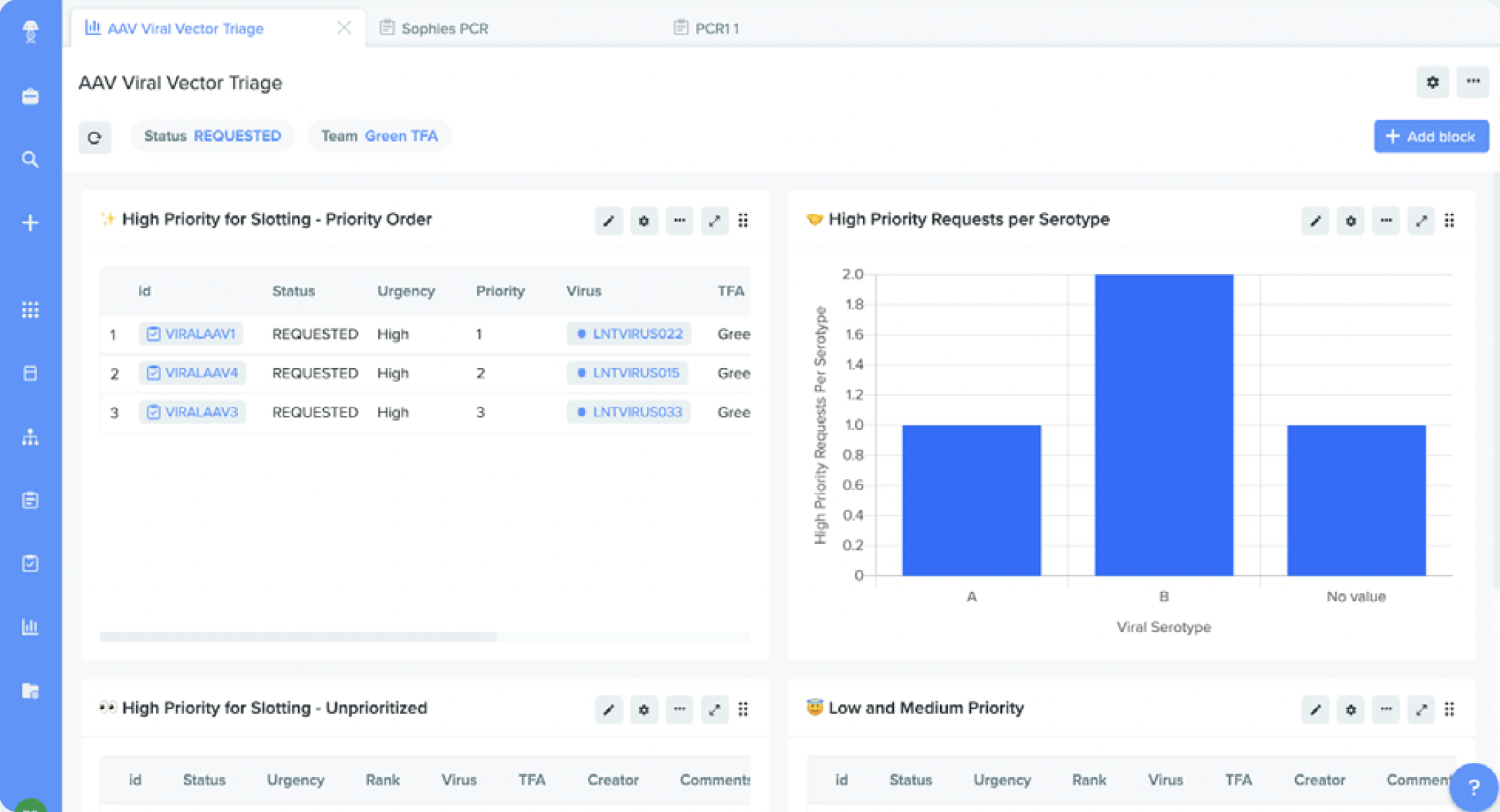
Unified platform
A unified platform built on the same data model enables every team to operate within a single system—providing a single source of truth, comprehensive connectivity, and deeper insights—even if workflow configurations and application requirements vary.
Sample and process intelligence
Benchling’s unified data model persists throughout all Benchling capabilities, so users can quickly trace samples, processes, locations, and results back to the underlying biological and chemical entities.
Modern user experience
Built on modern, responsive cloud architecture, Benchling’s UI/UX is intuitive and designed to make R&D teams more productive, which leads to higher adoption, better data integrity, and better informed scientific decision making.
Powering breakthroughs for over 1,300 biotechnology companies, from startups to Fortune 500s